







Table of content
Successful AI implementation depends on having AI readiness and proper data readiness. This comprehensive guide covers essential steps including data quality assessment, infrastructure preparation, and organisational change management.
Key takeaways:
Conduct thorough data audits, implement governance frameworks, use our AI readiness checklist, and follow proven AI readiness assessment frameworks for business. Companies with mature data preparation see 3–4x higher AI project success rates.
The promise of artificial intelligence is transforming how businesses operate, but success hinges on one critical factor: AI readiness. While organisations rush to implement AI solutions, many overlook the fundamental prerequisite that determines success or failure, having the right data foundation in place.
Data readiness isn’t just about having lots of data; it’s about having the right data, in the right format, at the right quality level. Without proper preparation, even the most sophisticated AI systems will deliver disappointing results, leaving businesses frustrated and questioning their technology investments.
Understanding AI Readiness: Beyond the Technology
AI readiness encompasses more than just purchasing the latest machine learning software. It represents your organisation’s comprehensive ability to successfully implement, deploy, and derive value from artificial intelligence initiatives. At its core, this readiness depends heavily on your data readiness for AI.
Think of data as the fuel that powers AI engines. Just as you wouldn’t put contaminated fuel in a high-performance car, you can’t expect AI systems to perform optimally with poor-quality, inconsistent, or incomplete data. Organisations that achieve AI ready data see significantly better outcomes from their AI investments.
The Harvard Business Review’s AI research consistently shows that companies with mature data governance practices are 5x more likely to make faster decisions than their competitors. This speed advantage becomes crucial when implementing AI solutions that require rapid data processing and analysis.
Consider how Amazon’s recommendation engine leverages vast amounts of customer data, purchase history, and behavioural patterns. The system’s effectiveness stems not just from sophisticated algorithms, but from Amazon’s years of investment in ai data readiness, ensuring their data is clean, accessible, and continuously updated.
Quick Assessment Question: Does your organisation currently have a clear understanding of what data you possess, where it’s stored, and what quality standards it meets?
The Foundation: What Makes Data AI-Ready?

Data Quality and Consistency
The journey toward ai data readiness begins with understanding your current data landscape. AI-ready data must meet several critical criteria:
Accuracy: Your data should reflect reality without significant errors or inconsistencies. Machine learning algorithms learn from patterns in data, so inaccurate information leads to flawed insights and poor decision-making. The IEEE Standards Association recommends maintaining accuracy rates above 95% for mission-critical AI applications.
Completeness: Missing data points create blind spots for AI systems. While some gaps can be handled through statistical methods, extensive missing data can severely limit AI effectiveness. Research from Gartner indicates that incomplete data reduces AI model accuracy by up to 40%.
Consistency: Data formats, naming conventions, and structures should be standardized across your organization. Inconsistent data creates confusion for AI algorithms and requires extensive preprocessing.
Data Accessibility and Integration
Having quality data locked in isolated systems doesn’t support AI initiatives. Data readiness requires that information flows seamlessly across your organization. This means breaking down data silos and creating integrated systems that allow AI tools to access the information they need.
Consider a retail company wanting to implement AI for inventory management. The system needs access to sales data, supplier information, seasonal trends, and customer behavior patterns. If this data exists in separate systems that don’t communicate, the AI solution cannot provide comprehensive insights.
Quick Assessment Question: Can your AI systems currently access all the data they need from different departments and systems within your organisation?
Building Your AI Readiness Framework
Assessment Phase: Where Are You Now?
Before implementing any AI readiness framework, conduct a thorough assessment of your current state. This evaluation should examine both technical and organizational factors that impact your ability to leverage AI effectively.
Data Audit: Catalog all data sources within your organization. Identify what data you have, where it’s stored, who owns it, and what condition it’s in. This audit reveals gaps and opportunities for improvement.
Infrastructure Review: Assess your current technology infrastructure’s ability to support AI workloads. Consider processing power, storage capacity, network capabilities, and security measures.
Skills Evaluation: Determine your team’s current AI and data science capabilities. Identify training needs and potential hiring requirements.

The AI Readiness Checklist: Your Step-by-Step Guide
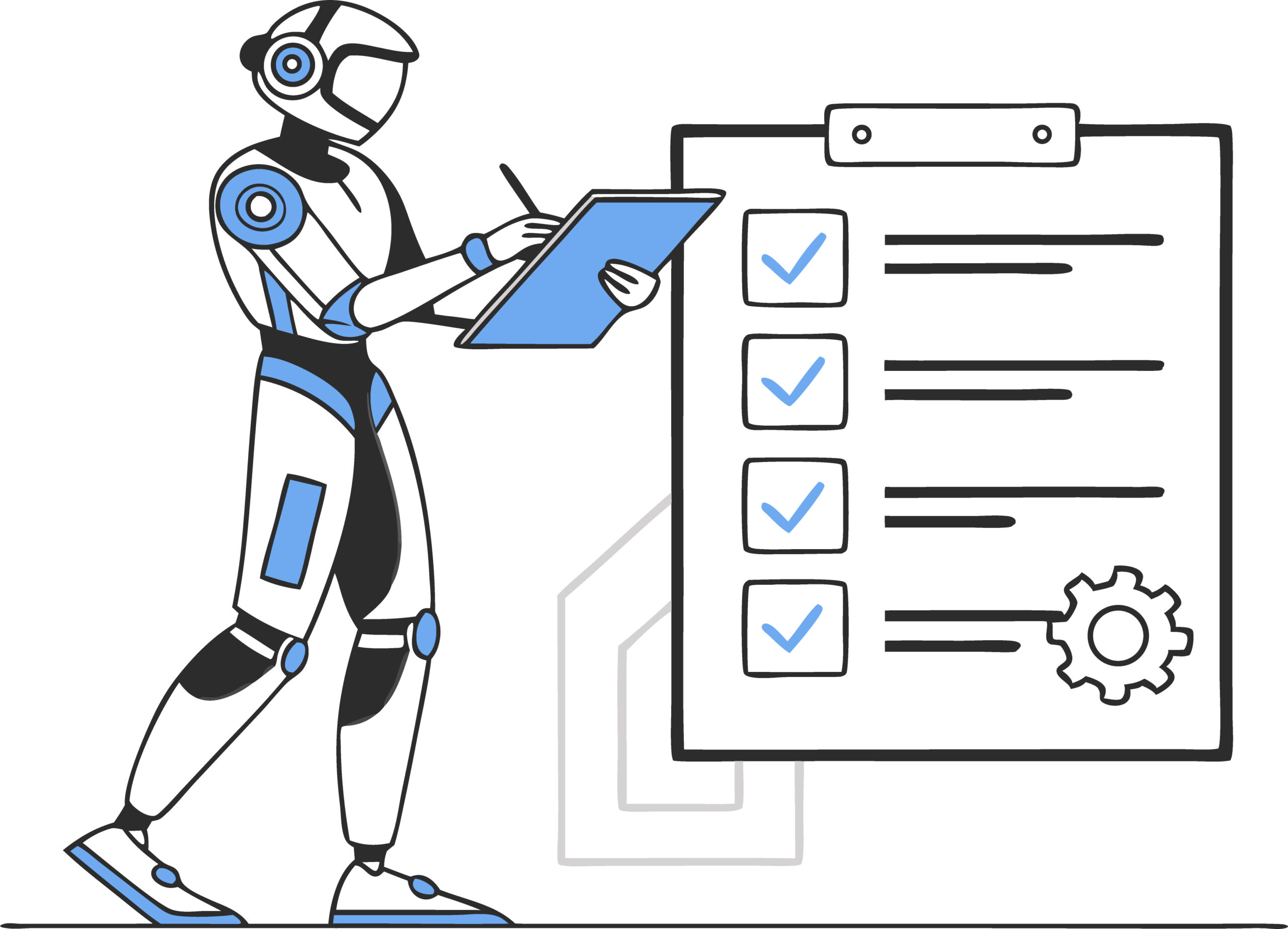
Creating a comprehensive ai readiness checklist helps ensure you don’t overlook critical preparation steps:
Data Foundation
- Conduct comprehensive data audit
- Establish data quality standards
- Implement data governance policies
- Create data integration pathways
- Ensure data security and compliance measures
Technical Infrastructure
- Assess computational requirements
- Evaluate storage and processing capabilities
- Review network and connectivity needs
- Implement appropriate security measures
- Plan for scalability requirements
Organizational Readiness
- Define AI strategy and objectives
- Identify key stakeholders and champions
- Assess team skills and training needs
- Establish change management processes
- Create governance and oversight structures
Compliance and Ethics
- Review regulatory requirements
- Establish ethical AI guidelines
- Implement bias detection measures
- Create transparency and explainability standards
- Plan for ongoing monitoring and auditing
Quick Assessment Question: Which areas of this checklist represent the biggest gaps in your current AI readiness preparation?
How to Measure AI Readiness: Key Metrics and Indicators
Understanding how to measure AI readiness requires establishing clear metrics that reflect your organization’s preparedness across multiple dimensions.
Data Quality Metrics
Completeness Score: Measure the percentage of complete records in your datasets. High completeness scores indicate better AI readiness.
Accuracy Rate: Track the percentage of correct data points through validation processes and cross-referencing with authoritative sources. The Data Quality Institute recommends regular accuracy assessments using statistical sampling methods.
Consistency Index: Evaluate how standardized your data formats and structures are across different systems and departments.
Infrastructure Readiness Indicators
Processing Capability: Assess your systems’ ability to handle AI workloads without significant performance degradation.
Data Accessibility: Measure how quickly and easily AI systems can access required data from various sources.
Scalability Factor: Evaluate your infrastructure’s ability to grow with increasing AI demands. Amazon Web Services case studies show that scalable architectures reduce long-term AI costs by 40%.
Organizational Maturity Metrics
Skills Assessment Scores: Regular evaluation of team capabilities in AI, data science, and related technologies.
Change Readiness Index: Measure your organization’s ability to adapt to AI-driven changes in processes and decision-making.
Governance Maturity: Assess the sophistication of your data governance and AI oversight processes.
Quick Assessment Question: What baseline measurements do you currently have in place to track your progress toward AI readiness?
Implementing an AI Readiness Assessment Framework for Business
Developing a robust AI readiness assessment framework for business requires a structured approach that examines multiple organizational layers.
Strategic Assessment Layer
Begin with a high-level evaluation of your business strategy and AI alignment. Ask critical questions: Does AI support your core business objectives? Have you identified specific use cases where AI can create measurable value? Do you have executive support for AI initiatives?
Operational Assessment Layer
Dive deeper into operational capabilities. Examine current processes, workflow integration points, and potential areas where AI can enhance efficiency or effectiveness. Consider how AI implementation might change existing operations and whether your organization is prepared for these changes.

Technical Assessment Layer
Conduct detailed technical evaluations covering data architecture, computational resources, integration capabilities, and security infrastructure. This layer often reveals the most concrete requirements and potential roadblocks.
Cultural Assessment Layer
Don’t underestimate the importance of organizational culture in AI success. Assess your team’s openness to change, willingness to work with AI tools, and overall digital literacy levels.
Quick Assessment Question: Which assessment layer – strategic, operational, technical, or cultural – presents the greatest challenges for your organisation?
Common Data Readiness Challenges and Solutions
Challenge 1: Data Silos
Many organizations struggle with data trapped in departmental silos, preventing comprehensive AI analysis.
Solution: Implement data integration platforms that can connect disparate systems while maintaining data security and compliance requirements.
Challenge 2: Inconsistent Data Formats
Different systems often use varying formats, naming conventions, and data structures.
Solution: Establish enterprise-wide data standards and implement automated data transformation processes that can standardize information from various sources.
Challenge 3: Poor Data Quality
Incomplete, outdated, or inaccurate data undermines AI effectiveness.
Solution: Implement comprehensive data quality management processes, including regular audits, validation rules, and automated cleansing procedures.
Challenge 4: Limited Data Governance
Without proper governance, data management becomes chaotic and compliance becomes challenging.
Solution: Establish clear data governance policies, assign data stewards, and implement tools for monitoring data usage and quality.
Quick Assessment Question: Which of these challenges most significantly impacts your current data management processes?
Measuring Success: KPIs for AI Readiness
Track your progress using specific key performance indicators:
- Data Quality Score: Composite metric measuring accuracy, completeness, and consistency
- Integration Efficiency: Time required to access and combine data from multiple sources
- AI Project Success Rate: Percentage of AI initiatives that meet their objectives
- Time to Value: Duration from AI project initiation to measurable business impact
- Data Governance Maturity: Assessment of policy compliance and data stewardship effectiveness
Quick Assessment Question: Which KPIs align most closely with your organisation’s strategic objectives for AI implementation?
The ROI of Proper Data Preparation
Organisations that invest in comprehensive data readiness see significantly better returns on their AI investments. Studies from Accenture show that companies with mature data preparation processes achieve AI project success rates 3-4 times higher than those that skip this crucial step.
Consider the cost of inadequate preparation: failed AI projects, wasted resources, missed opportunities, and potential compliance issues. These risks far outweigh the upfront investment in proper data readiness.
Conclusion: Your Path Forward
Achieving true AI readiness requires more than enthusiasm and budget allocation. It demands a systematic approach to data preparation, infrastructure development, and organizational change management.
Start with a comprehensive assessment of your current state, develop a realistic roadmap for improvement, and commit to the systematic work required to prepare your data foundation. Remember that AI readiness is not a destination but an ongoing journey of continuous improvement and adaptation.
Your AI journey begins with data readiness. Take the first step today by conducting an honest assessment of your current capabilities and committing to the preparation work that will ensure your AI initiatives deliver the transformative results your business deserves.
Summary: Key Takeaways
Data readiness is the critical success factor for AI implementation success. Organisations with mature data processes achieve 3-4x higher AI project success rates than those without proper preparation.
Essential Action Items:
- Assess current state using comprehensive AI readiness checklists
- Implement data governance with quality standards above 95% accuracy
- Follow proven frameworks across strategic, operational, technical, and cultural dimensions
- Measure progress through specific KPIs and continuous monitoring
- Plan for scalability and emerging technology requirements
The organisations that succeed with AI are those that recognise data readiness as the critical success factor. By following the framework and strategies outlined in this guide, you’re positioning your business not just to implement AI, but to extract maximum value from these transformative technologies.
Your AI journey begins with data readiness. Take the first step today by conducting an honest assessment of your current capabilities and committing to the preparation work that will ensure your AI initiatives deliver the transformative results your business deserves.
Frequently Asked Questions (FAQs)
What is AI readiness?
AI readiness refers to how prepared an organisation is to successfully adopt, integrate, and scale AI technologies. It involves assessing data quality, infrastructure, processes, and organisational culture.
Why is data readiness important for AI?
Without high-quality, structured, and accessible data, AI models cannot deliver accurate or reliable outcomes. Data readiness ensures businesses have AI-ready data to support integration.
How to measure AI readiness?
AI readiness can be measured through an AI readiness assessment framework that evaluates areas like data maturity, technology infrastructure, workforce skills, and leadership buy-in
What is an AI readiness checklist?
An AI readiness checklist is a structured list of factors (such as data quality, governance, security, and scalability) that businesses must evaluate before deploying AI.
What industries benefit most from AI readiness frameworks?
Industries like retail, healthcare, finance, manufacturing, and logistics gain immediate value, but AI readiness applies universally to any data-driven organisation.
